
Meet Our Advisory Board

Sneha Dave, BA
Executive Director and Founder of Generation PatientSneha graduated from Indiana University in May 2020 where she majored in chronic illness advocacy as well as journalism. She created Generation Patient and its program the Crohn’s and Colitis Young Adults Network (CCYAN) to develop support systems for adolescents and young adults with chronic conditions across the U.S. and internationally. She is proud to work with a team composed entirely of young adults with chronic conditions and also to keep Generation Patient and CCYAN independent from the pharmaceutical and insurance industries. Sneha has completed an undergraduate research fellowship in health policy at Harvard T.H. Chan School of Public Health. She has also interned at numerous places such as Pfizer in health economics and outcomes research for Inflammation and Immunology. Sneha has spoken on Capitol Hill, featured nationally on C-SPAN, and is a past contributor for U.S. News and World Report. She has served on the Democratic National Committee Disability Policy Subcommittee and recently joined the Midwest Comparative Effectiveness Public Advisory Council, an independent appraisal committee of the Institute for Clinical and Economic Review. She also serves on the FDA Patient Engagement Collaborative and in a grantmaking committee with the Robert Wood Johnson Foundation. Sneha was awarded two academic fellowships with the Association of Health Care Journalists. For her work, she was selected as one of the most influential teenagers in 2018 by the We Are Family Foundation and was recognized as an American Association of People with Disabilities Emerging Leader in 2020.

Peter Lurie, MD, MPH
President of the Center for Science in the Public Interest
Peter Lurie, MD, MPH is President of the Center for Science in the Public Interest. CSPI envisions a healthy population with reduced impact and burden of preventable diseases and an equitable food system that makes healthy, sustainable food accessible to all. CSPI publishes a newsletter, Nutrition Action, and conducts advocacy on Capitol Hill, in the regulatory agencies, in the courts, at the state and local level, and through corporate campaigns. Previously, Lurie was the Associate Commissioner for Public Health Strategy and Analysis at the Food and Drug Administration, where he worked on antimicrobial resistance, agency transparency, caffeinated beverages, arsenic in rice, expanded access to investigational drugs, and prescription drug abuse. Prior to that, he was Deputy Director of Public Citizen’s Health Research Group, where he addressed drug and device issues, coauthored the organization’s Worst Pills, Best Pills consumer guide to medications, and led efforts to reduce worker exposure to hexavalent chromium and beryllium. Earlier, as a faculty member at the University of California, San Francisco and the University of Michigan, he studied needle exchange programs, ethical aspects of mother-to-infant HIV transmission studies, and other HIV policy issues domestically and abroad.
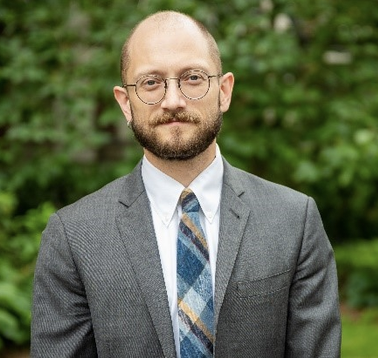
Christopher J. Morten, JD, PhD
Associate Professor of LawChristopher Morten is an expert on technology, health, information, and “intellectual property” law, and the founding director of Columbia Law School’s Science, Health, and Information Clinic. In his clinical work, Morten seeks to serve the public interest by fighting for more equitable access to scientific, technical, and medical knowledge. His scholarship grows out of his clinical work. It considers how law and policy shape the ways that knowledge flows through our economy and society and how law and policy influence how new technologies are invented, validated, manufactured, distributed, and used. Some of his recent publications describe the U.S. Food and Drug Administration’s legal authority to publicize a trove of valuable scientific data it currently keeps secret; analyze the U.S. government’s power to use privately patented technologies in the public interest; and present a progressive vision for the pharmaceutical and biotech sectors of our economy and society, post-COVID-19. Morten joined the Columbia Law faculty in 2021. Previously, he was the deputy director of the Technology Law and Policy Clinic at New York University School of Law, a fellow at NYU’s Engelberg Center on Innovation Law and Policy, a supervising attorney and clinical lecturer in Yale Law School’s Media Freedom and Information Access Clinic, and the staff attorney at Yale’s Collaboration for Research Integrity and Transparency. He remains a visiting fellow of Yale’s Global Health Justice Partnership and an affiliate fellow of Yale’s Information Society Project. Before beginning his teaching career, Morten worked as a litigation associate and science adviser at Goodwin Procter and as a patent agent at Baker Botts. He also clerked for Judge Timothy B. Dyk of the U.S. Court of Appeals for the Federal Circuit.
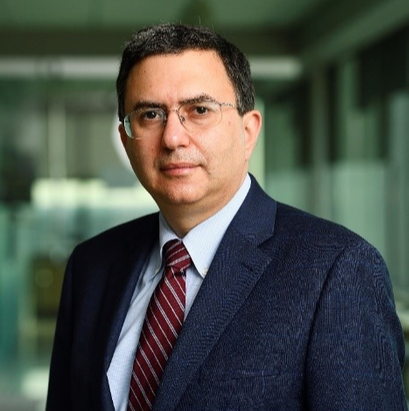
Josh Sharfstein, MD
Vice Dean for Public Health Practice and Community EngagementDistinguished Professor of the Practice
Joshua is a Professor of the Practice in Health Policy and Management at the Johns Hopkins Bloomberg School of Public Health, where he also serves as Vice Dean for Public Health Practice and Community Engagement and as Director of the Bloomberg American Health Initiative. A pediatrician by training, he is a former health commissioner of Baltimore, Principal Deputy Commissioner of the U.S. Food and Drug Administration, and health secretary of Maryland. He is an elected member of the National Academy of Medicine and the National Academy of Public Administration. One of the focus areas of Dr. Sharfstein's work is crisis and emergency management. He teaches a class entitled "Crisis and Response in Public Health Policy and Practice" and is the author of The Public Health Crisis Survival Guide: Leadership and Management in Trying Times, published in 2018 by Oxford University Press.
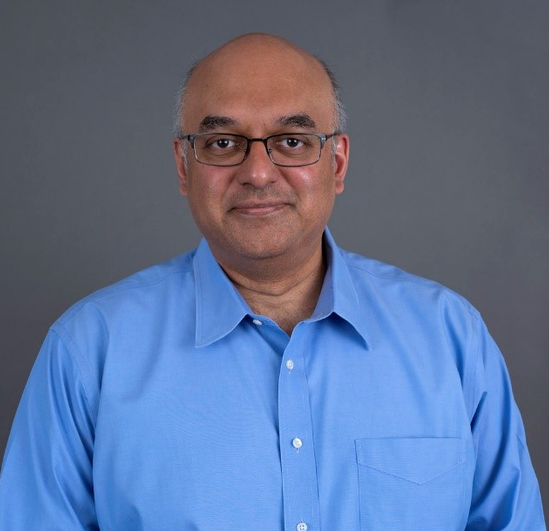
Neil Thakur, PhD
Founder and Principal of Thakur Health Sciences, LLCNeil brings more than two decades of experience as a public health expert to the fight against ALS. He has led The ALS Association’s mission programs – research, care services, and advocacy – since 2018. Before joining the Association, Dr. Thakur served in the National Institutes of Health (NIH) Office of the Director, making NIH research more impactful. He managed the world’s largest policy to make biomedical research papers publicly accessible and co-chaired the White House taskforce that lead to the requirement that all federal science agencies adopt similar policies. He also spent a year on detail to the US Senate Special Committee on Aging, focusing on effective long-term health care. Prior to his time at NIH, he was Assistant Director of Health Services Research and Development at the Department of Veterans Affairs. Dr. Thakur has received numerous federal awards, including the Secretary for Health and Human Services’ award for Meritorious Service, the second highest award that the Secretary can bestow. Dr. Thakur holds a Ph.D. in Health Policy from Yale University School of Public Health and completed a NIMH postdoctoral fellowship in mental health services research at the Cecil G. Sheps Center for Health Services Research at the University of North Carolina at Chapel Hill.