
Regulatory Pathways
-
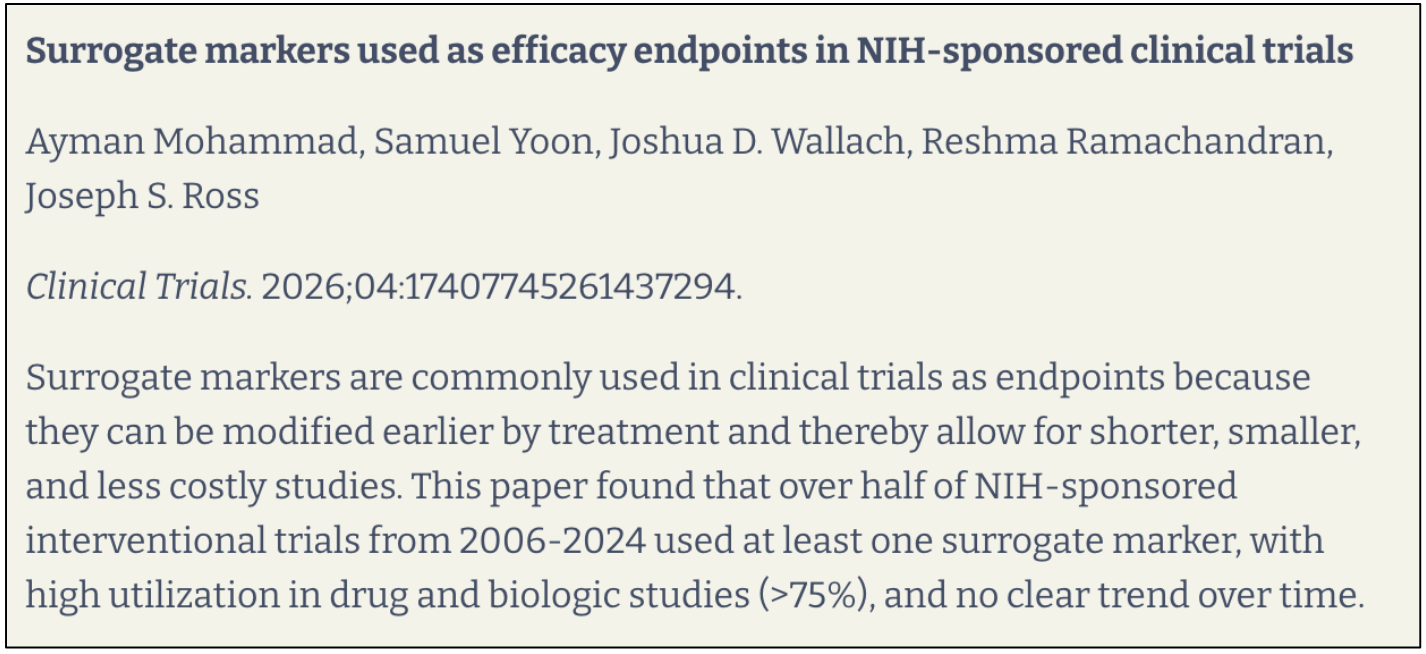
Surrogate markers used as efficacy endpoints in NIH-sponsored clinical trials
Ayman Mohammad, Samuel Yoon, Joshua D. Wallach, Reshma Ramachandran, Joseph S. Ross
Clinical Trials. 2026;04:17407745261437294.
Surrogate markers are commonly used in clinical trials as endpoints because they can be modified earlier by treatment and thereby allow for shorter, smaller, and less costly studies. This paper found that over half of NIH-sponsored interventional trials from 2006-2024 used at least one surrogate marker, with high utilization in drug and biologic studies (>75%), and no clear trend over time.
-
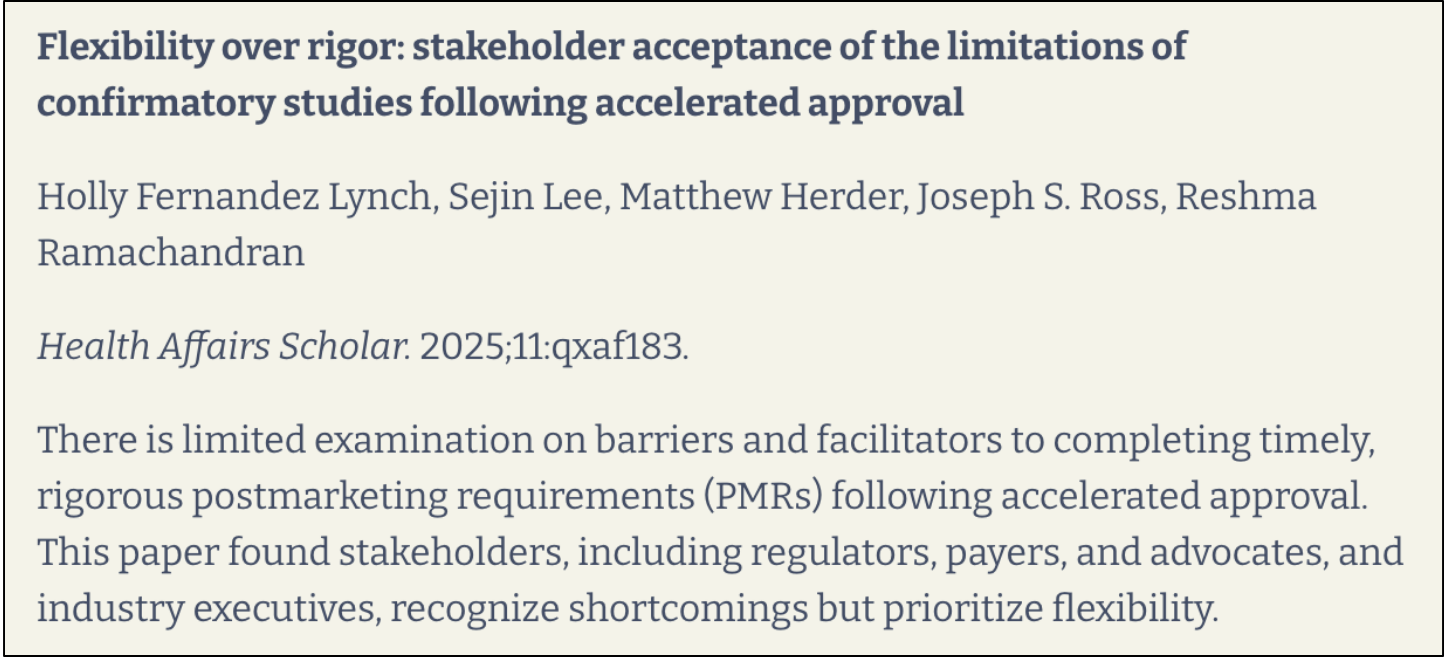
Holly Fernandez Lynch, Sejin Lee, Matthew Herder, Joseph S. Ross, Reshma Ramachandran
Health Affairs Scholar. 2025;11:qxaf183.
There is limited examination on barriers and facilitators to completing timely, rigorous postmarketing requirements (PMRs) following accelerated approval. This paper found stakeholders, including regulators, payers, and advocates, and industry executives, recognize shortcomings but prioritize flexibility.
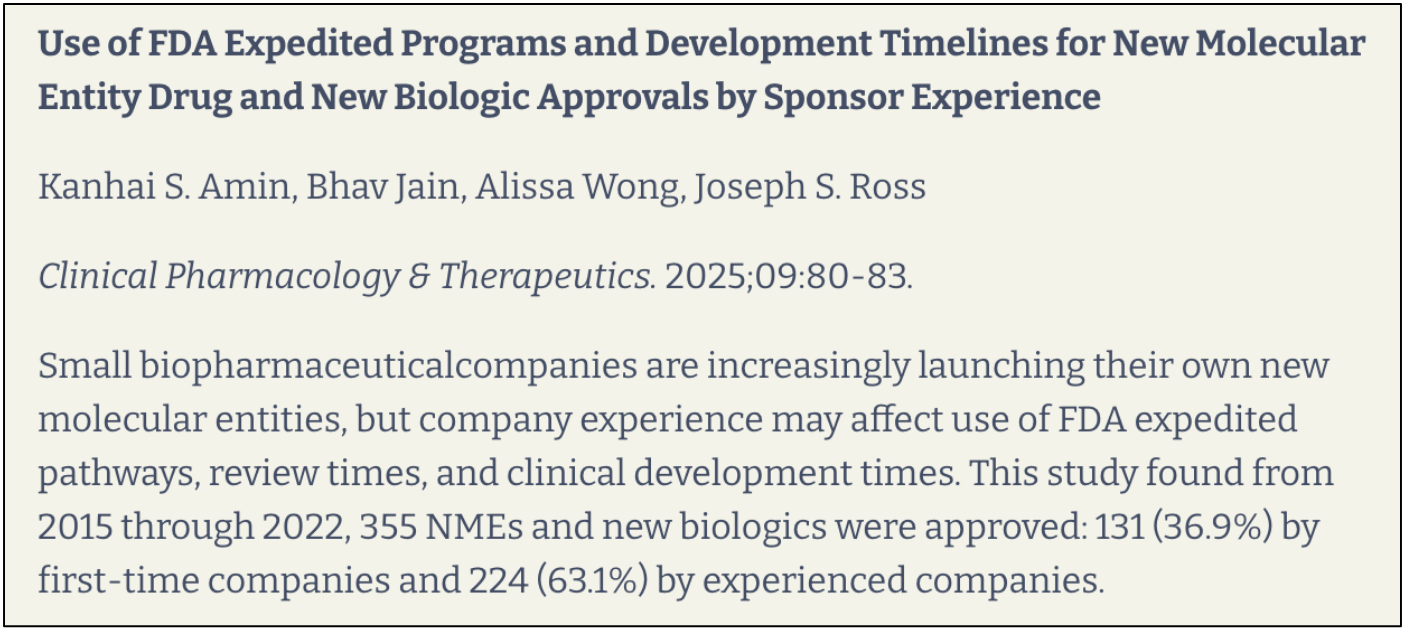
Kanhai S. Amin, Bhav Jain, Alissa Wong, Joseph S. Ross
Clinical Pharmacology & Therapeutics. 2025;09:80-83.
Small biopharmaceuticalcompanies are increasingly launching their own new molecular entities, but company experience may affect use of FDA expedited pathways, review times, and clinical development times. This study found from 2015 through 2022, 355 NMEs and new biologics were approved: 131 (36.9%) by first-time companies and 224 (63.1%) by experienced companies.
FDA Authorization of Therapeutic Devices Under The Breakthrough Devices Program
Kushal T. Kadakia, Sanket S. Dhruva, Joseph S. Ross, James F. Burke, James L. Johnston, Reshma Ramachandran, Harlan M. Krumholz, Vinay K. Rathi
JAMA Internal Medicine. 2025;06:996-1004.
The Breakthrough Device Program was established in 2016 to promote innovation and facilitate patient access, but clinical and regulatory characteristics of breakthrough devices have not been assessed. This paper found that that most therapeutic breakthrough–designated devices are novel, and the FDA granted breakthrough designations to 1041 devices, 127 of which have been authorized, including 75 therapeutic devices, between 2016-2024.
Nonconcurrent Control Use in FDA Approval of High-Risk Medical Devices
Maryam Mooghali, Sanket S. Dhruva, Hollin R.L. Hakimian, Vinay K. Rathi, Kushal T. Kadakia, Joseph S. Ross
JAMA Network Open. 2025;04:e256230.
For clinical studies evaluating safety and/or effectiveness of high-risk devices, the FDA may consider historical controls, objective performance criteria, or performance goals as alternatives to concurrent control groups. This study found that from 2019-2023, the FDA approved 101 original high-risk therapeutic medical devices, with most approvals based on analyses using nonconcurrent controls with limited justification and clinically relevant details.
-
Premarket Pivotal Trial End Points and Postmarketing Requirements for FDA Breakthrough Therapies
Maryam Mooghali, Joshua D. Wallach, Joseph S. Ross, Reshma Ramachandran
JAMA Network Open.2024;08:e2430486.
Breakthrough Therapy drugs can receive accelerated or traditional approval, however, little is known approvals through the latter pathway, where postmarketing confirmatory studies are usually not required, regardless of endpoints used. This study found from 2013-2023, of the 157 breakthrough therapy designations, 52 (33%) were granted accelerated approval and 105 (67%) were granted traditional approval, with trials frequently using surrogate markers as primary endpoints and a lack of postmarketing studies.
Premarket Evidence and Postmarketing Requirements for Real-Time Oncology Review Indication Approvals
Maryam Mooghali, Ayman Mohammad, Joshua D. Wallach, Aaron P. Mitchell, Joseph S. Ross, Reshma Ramachandran
JAMA Network Open. 2024;05:e249233.
In 2018, the FDA launched the Real-Time Oncology Review (RTOR) program to support earlier review of therapeutics expected to be an improvement over available therapy based on straightforward study designs and easily interpreted end points. This study found 1/5 of new FDA oncology indication approvals were reviewed under RTOR since its inception, were often supported by pivotal trials using surrogate end points, but indications with traditional approvals based on surrogate end points rarely had postmarketing requirements.
Joshua D. Wallach, Samuel Yoon, Harry Doernberg, Laura R. Glick, Oriana Ciani, Rod S. Taylor, Maryam Mooghali, Reshma Ramachandran, Joseph S. Ross
JAMA. 2024;04:1646-1654.
Surrogate markers are increasingly used as primary end points in clinical trials supporting drug approvals. This paper found that of 37 surrogate markers listed in the FDA Adult Surrogate Endpoint Table, most lack high-strength evidence of associations with clinical outcomes from published meta- analyses.
Maryam Mooghali, Aaron P. Mitchell, Joshua J. Skydel, Joseph S. Ross, Joshua D. Wallach, Reshma Ramachandran
BMJ Medicine. 2024;04:e000802.
The National Comprehensive Cancer Network (NCCN) guidelines do not always reflect key information regarding therapeutics granted accelerated approval. This paper found of 39 oncology drugs granted accelerated approval, NCCN guidelines recommended all indications, but accelerated approval status was reported for 10 (16%) indications.
-
Alissa K. Wong, Maryam Mooghali, Reshma Ramachandran, Joseph S. Ross, Joshua D. Wallach
JAMA Network Open. 2023;08:e2331753.
The FDA uses multiple pathways, such as fast track, breakthrough therapy, accelerated approval, and priority review, to expedite clinical development and/or drug review of novel therapeutics. This study found that approvals using expedited regulatory programs had shorter clinical development times and combined clinical development and review times by approximately 1-2 years.
James L. Johnson, Joseph S. Ross, Reshma Ramachandran
JAMA Internal Medicine. 2023;02:376-380.
In June 2021, FDA granted accelerated approval to aducanumab for the treatment of Alzheimer disease despite both pivotal trials being stopped for futility with respect to the primary trial end point: change from baseline clinical dementia rating score. This study found that from 2018 to 2021, 10% of drugs approved by the FDA were based on pivotal studies with null findings for 1 or more primary efficacy end points.