
Representation and Real-World Evidence
-
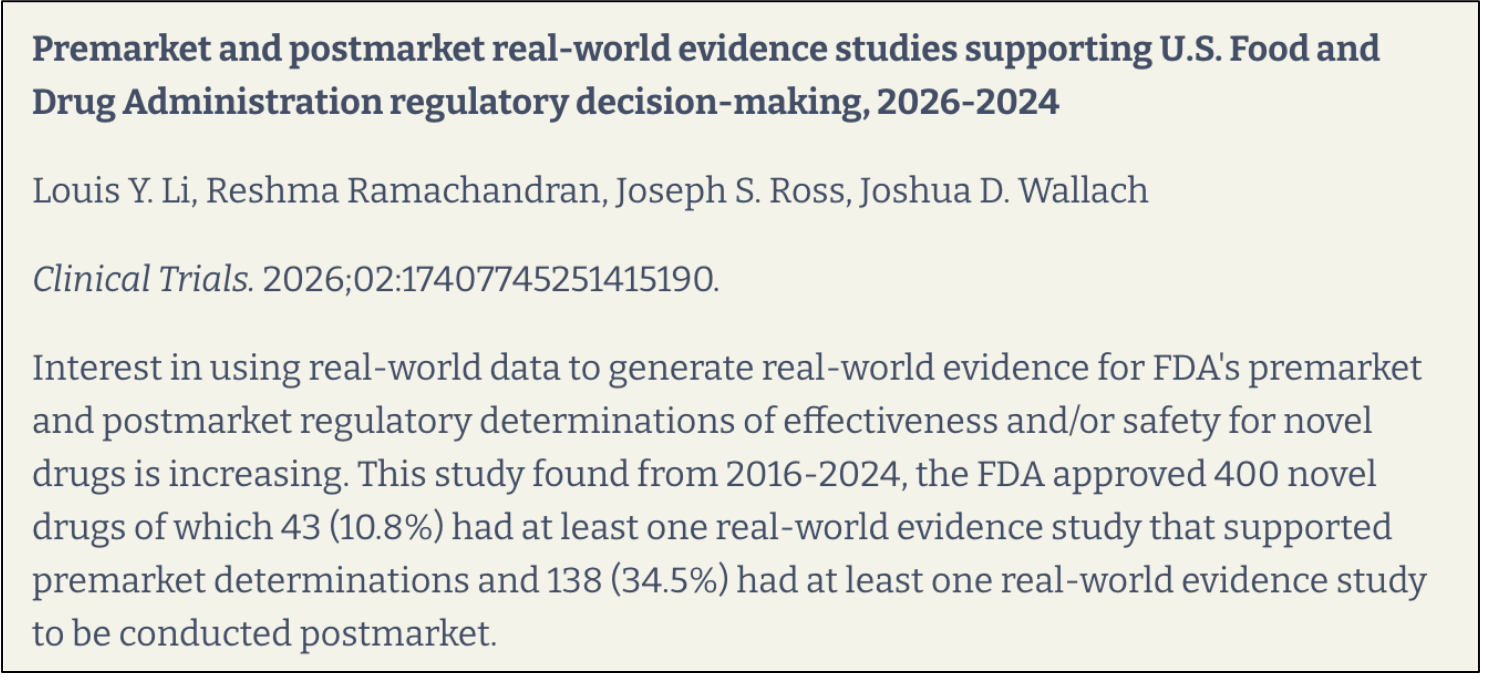
Louis Y. Li, Reshma Ramachandran, Joseph S. Ross, Joshua D. Wallach
Clinical Trials. 2026;02:17407745251415190.
Interest in using real-world data to generate real-world evidence for FDA's premarket and postmarket regulatory determinations of effectiveness and/or safety for novel drugs is increasing. This study found from 2016-2024, the FDA approved 400 novel drugs of which 43 (10.8%) had at least one real-world evidence study that supported premarket determinations and 138 (34.5%) had at least one real-world evidence study to be conducted postmarket.
-
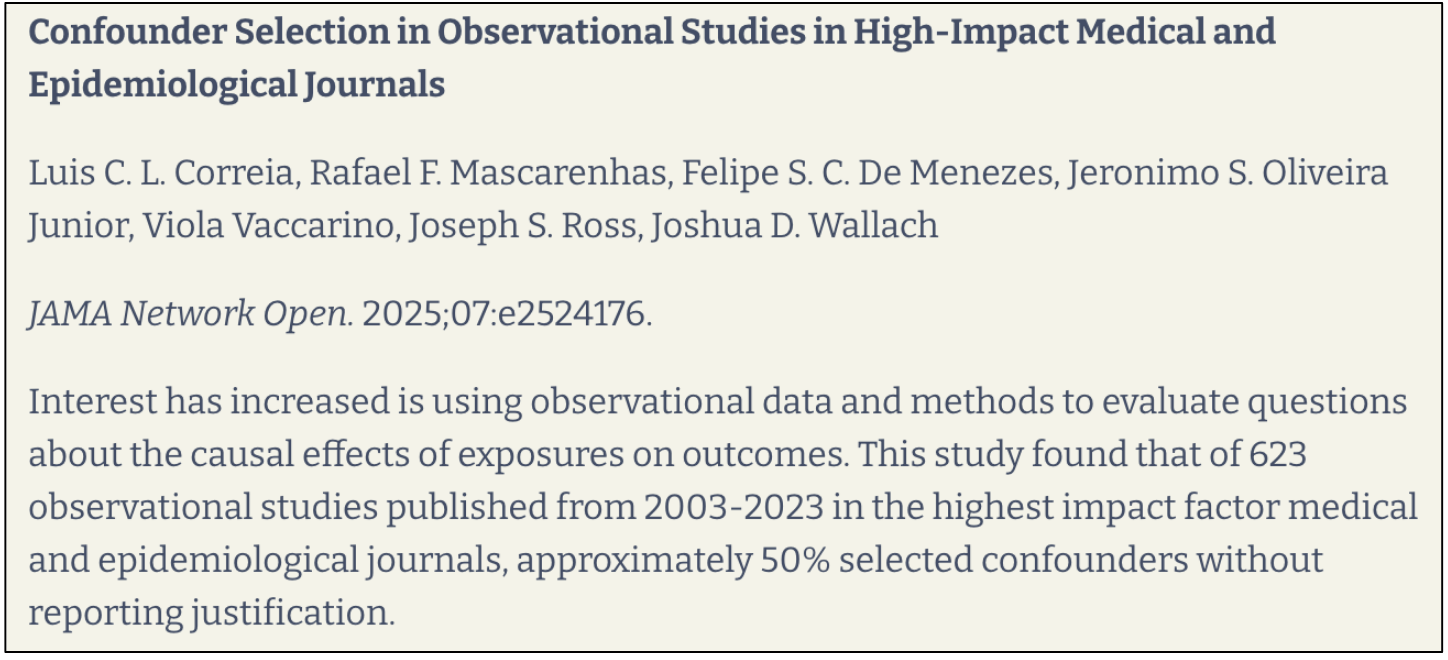
Confounder Selection in Observational Studies in High-Impact Medical and Epidemiological Journals
Luis C. L. Correia, Rafael F. Mascarenhas, Felipe S. C. De Menezes, Jeronimo S. Oliveira Junior, Viola Vaccarino, Joseph S. Ross, Joshua D. Wallach
JAMA Network Open. 2025;07:e2524176.
Interest has increased is using observational data and methods to evaluate questions about the causal effects of exposures on outcomes. This study found that of 623 observational studies published from 2003-2023 in the highest impact factor medical and epidemiological journals, approximately 50% selected confounders without reporting justification.
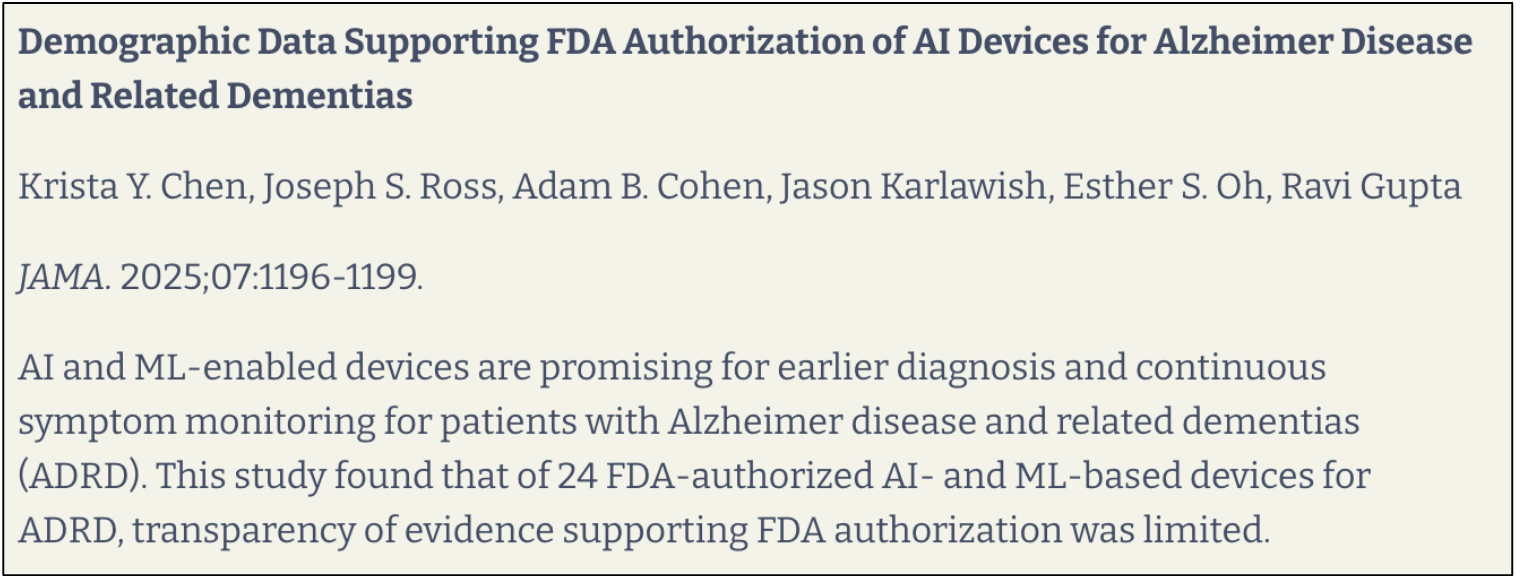
Krista Y. Chen, Joseph S. Ross, Adam B. Cohen, Jason Karlawish, Esther S. Oh, Ravi Gupta
JAMA. 2025;07:1196-1199.
AI and ML-enabled devices are promising for earlier diagnosis and continuous symptom monitoring for patients with Alzheimer disease and related dementias (ADRD). This study found that of 24 FDA-authorized AI- and ML-based devices for ADRD, transparency of evidence supporting FDA authorization was limited.
-
Guneet S. Janda, Molly Moore Jeffery, Reshma Ramachandran, Joseph S. Ross, Joshua D. Wallach
BMC Medical Research Methodology. 2024;08:187.
There is growing interest in using real-world evidence (RWE) for evaluating the efficacy and safety of medical products for substance use disorders. This paper found of 272 trials, there were no trials for which all 5 characteristics were ascertainable using contemporarily available administrative claims and/or structured EHR data.
Matthew J. Swanson, Colin L. Uyeki, Sarah R. Yoder, Sanket S. Dhruva, Jennfier E. Miller, Joseph S. Ross
Medical Devices: Evidence and Research. 2024;04:165-172.
Diverse study populations are necessary in medical device trials to understanding safety and efficacy. This study found approximately 33% of pivotal studies for high-risk cardiovascular devices approved by the FDA from 2014-2022 did not report the race of study participants, nearly 40% did not report ethnicity, and more than 90% did not report the participation of older adults.
-
Joshua J. Skydel, Reshma Ramachandran, Sakinah Suttiratana, Joseph S. Ross, Christopher M. Burns, Joshua D. Wallach
The Journal ofRheumatology. 2023;12:320-322.
There is growing interest in clinical research for systemic lupus erythematosus (SLE) potential therapies. This paper found concentration of US enrollment sites in large metropolitan areas and persistent underrepresentation of Black and American Indian/Alaska Native participants relative to the US population with SLE in industry-sponsored CTs investigating SLE therapies.
Pivotal Trial Demographic Representation and Clinical Development Times for Oncology Therapeutics
Alissa K. Wong, Jennifer E. Miller, Maryam Mooghali, Reshma Ramachandran, Joseph S. Ross, Joshua D. Wallach
JAMA. 2023;12:2392-2394.
Diverse study populations are necessary in clinical trials supporting new oncology drug approvals. This study found that of 82 novel therapeutics between 2015-2021, most indications were approved based on pivotal trials with adequate representation for female (82%) and Asian (73%) but not older (46%), Black (11%), and Hispanic/Latino (27%) patients.
Guneet S. Janda, Joshua D. Wallach, Meera M. Dhodapkar, Reshma Ramachandran, Joseph S. Ross
JAMA Internal Medicine. 2023;11:1271-1273.
The FDA has a framework for utilizing data gathered outside of clinical trials to evaluate safety and effectiveness. This paper found from 2017-2019, the FDA approved 138 sNDAs and sBLAs for new indications based on 172 pivotal trials, and that only 1 trial could be feasibly emulated using contemporary claims and/or structured EHR data.